Air, Sea, Rail or Express from China: How to Choose
Compare air freight, sea freight, China–Europe rail and express from China by speed, how each one is charged and what it suits best.
Key takeaways
- Express is usually best for samples, documents and parcels under about 21 kg; it is priced per 0.5 kg with a ÷ 5,000 volumetric divisor.
- Air freight suits urgent or high-value cartons: about 7–9 days from Shenzhen or Hong Kong to Los Angeles (LAX) plus delivery, and direct consolidations to Europe can arrive 4–7 days after entering our warehouse.
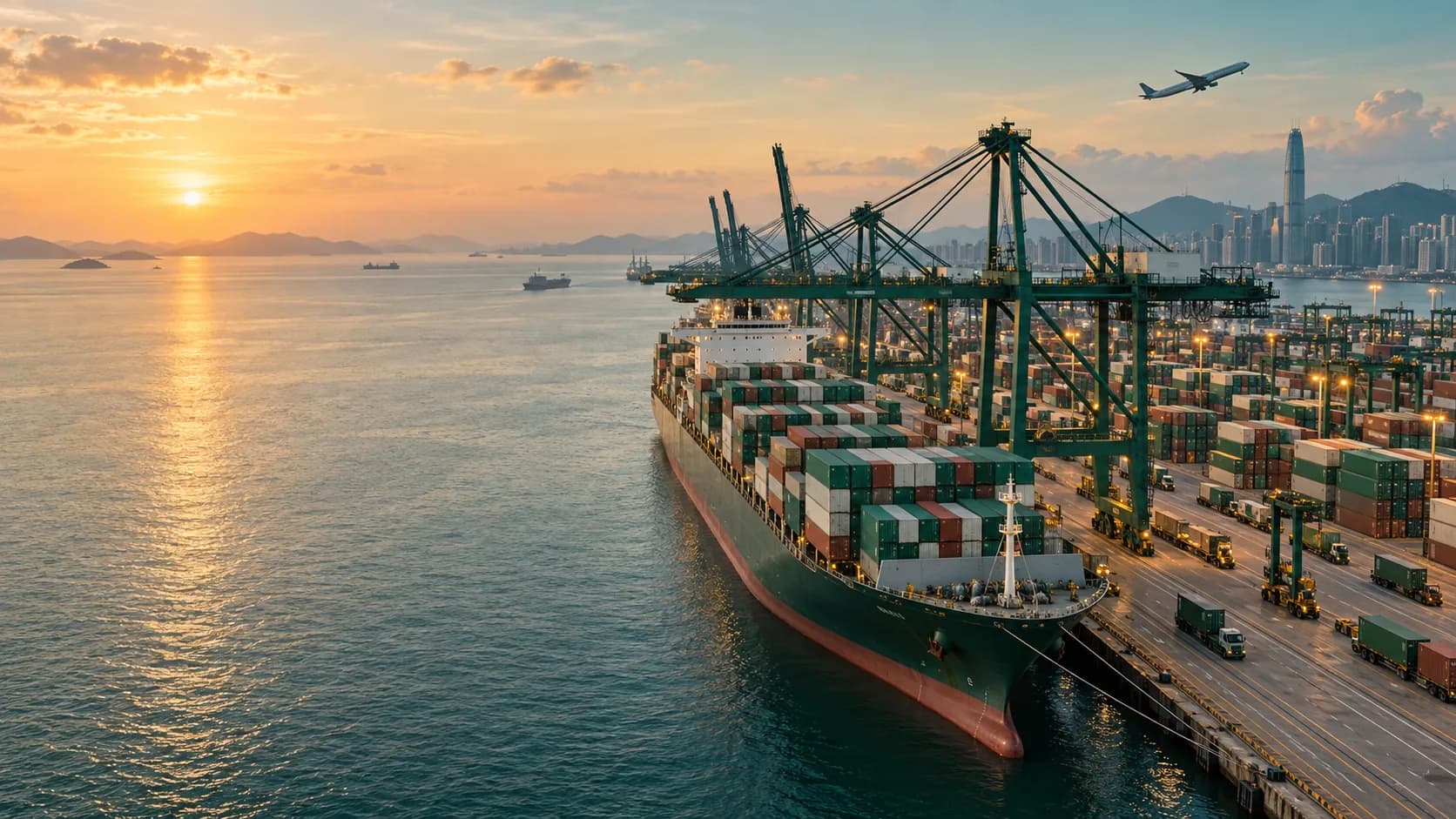
- Sea freight is the cheapest way to move volume: about 14–16 days to Los Angeles / Long Beach and 22–25 days to European ports, plus customs and delivery.
- To Europe, China–Europe rail takes 16–19 days plus UPS delivery, with duties and taxes paid (DDP), at about a third of the air price.
Choose by weight, deadline and destination. Express suits samples and parcels under about 21 kg that must arrive quickly; air freight suits urgent or high-value cartons; sea freight is the cheapest way to move large volumes when you can wait several weeks; and for Europe, China–Europe rail sits in between at 16–19 days by rail with duties and taxes paid.
The rest of this guide compares the four methods on the points that decide most shipments: how fast each one is from Shenzhen, how it is charged, and which goods it suits. Times below are the ones published on our route pages; the schedule for your own shipment is confirmed when you book.
The four methods at a glance
| Method | Typical time from Shenzhen | How it is charged | Best for |
|---|---|---|---|
| Express (DHL, FedEx, UPS, TNT, EMS) | Fastest for small parcels; confirmed with your quote | Per 0.5 kg, then per kg from 21 kg; volumetric weight ÷ 5,000 | Samples, documents, urgent parcels |
| Air freight | 7–9 days to LAX + delivery; 4–7 days to Europe by direct consolidation; 4–5 days to Japan | Per chargeable kg (÷ 6,000), cheaper at higher weight breaks | Urgent restocks, high-value and lighter goods, Amazon FBA replenishment |
| Sea freight (LCL or FCL) | 14–16 days to LA / Long Beach, 7–9 to Tokyo or Osaka, 20–25 to Australia, 22–25 to Europe, port to port | LCL per CBM or per 1,000 kg, whichever is greater; FCL per container | Bulk inventory, heavy and oversized goods, planned restocks |
| China–Europe rail (DDP) | 16–19 days by rail + UPS delivery | Per kg, published rates to 26 European countries from 26 kg, duties and taxes included | Europe restocks that can wait about three weeks |
When does express beat air freight?
Express is the simplest option for small shipments. We book DHL, FedEx, UPS, TNT and EMS through our agent accounts, and the carrier collects, flies, clears and delivers the parcel with tracking on its own system. Prices are set per 0.5 kg up to 21 kg and per kg after that, so a single sample box or a few kilos of documents cost far less than a minimum air freight charge.
Two things push larger shipments towards air freight. First, express divides volume by 5,000 instead of 6,000, so bulky, light cartons get expensive quickly. Second, our published air rates start from a minimum of 22 kg to the USA, Canada and Australia (11 kg to New Zealand), and per-kg rates fall at higher weight breaks. Around 20 kg is where it pays to compare both. On express, the receiver also usually pays import duties and taxes on delivery.
Air freight vs sea freight: what do you pay for speed?
According to IATA, air cargo carries more than a third of world trade by value but less than 1% by volume. That is the trade-off in one sentence: air is for goods where time and value matter more than freight cost. It is charged by chargeable weight, the greater of the actual weight and the volumetric weight; our guide to volumetric and chargeable weight shows the arithmetic with examples.
Sea freight, which UNCTAD says carries around 80% of the volume of international trade, is charged by space instead. A shipment of 300 kg packed into 1 CBM shows the difference: by air its chargeable weight is 300 kg, because the actual weight is greater than the volumetric 167 kg; by LCL sea freight it is charged as 1 CBM, because 1 CBM is greater than 0.3 tonnes. The heavier and bulkier the shipment, the more sea saves, as long as the extra two to three weeks are acceptable.
Is China–Europe rail worth it?
For Europe, rail fills the gap between a 4–7-day air consolidation and 22–25 days at sea plus clearance and delivery. Our China–Europe rail line runs door to door with duties and taxes paid: we handle the export declaration, the rail leg, import clearance and import taxes, and UPS delivers to the final address or to Amazon warehouses in Germany, France, Czechia, Poland, the Netherlands, Italy and Spain.
Rates for 26 European countries, from 26 kg, are published on the China–Europe route page, at about a third of the air price. Rail is a good fit for restocks of a few hundred kilograms that can wait about three weeks, and for sellers who would rather not receive a separate tax bill on arrival.
A simple way to decide
- Samples, documents or parcels under about 21 kg: compare express first.
- A deadline within about two weeks: air freight, or express for small parcels.
- Europe, a few hundred kilograms, about three weeks to spare and duties handled for you: China–Europe rail.
- Several cubic metres or heavy goods with time to spare: sea freight. Under roughly 15 CBM, LCL is usually cheaper; above that a 20-foot container often wins, as our LCL vs FCL guide explains.
- Batteries, magnets, liquids or powders: special goods need a check before any method is booked.
What else can change the answer?
The method is only part of the cost. Import duties depend on the HS code and the destination, remote delivery areas add charges, and special goods need a separate review because our published rates are for general cargo. Peak periods matter too: before Chinese New Year, space tightens on every mode, so plan early.
Many importers combine methods. A common pattern is to fly part of an order to avoid running out of stock and send the rest by sea. Goods from several suppliers can be received, checked and consolidated at our Shenzhen warehouse first, so each leg leaves as one shipment.
Compare your own shipment
The comparison table on our homepage prices air, express, sea and rail side by side for your destination, weight and volume, and adds duties and taxes from the official tariff when you give an HS code and the goods value. Estimates use the general-cargo rates published on our site, for reference only; a specialist confirms the final price and schedule in writing.
FAQ
Is sea freight always cheaper than air freight from China?
For shipments of more than a few cubic metres, almost always, because sea is charged per cubic metre or per 1,000 kg rather than per chargeable kilogram. For small, light shipments the fixed origin and destination charges of sea freight can make air or express competitive, so compare both before booking.
How much faster is air than sea from China to the USA?
Air freight from Shenzhen or Hong Kong reaches LAX in about 7–9 days, while sea freight from Yantian or Shekou takes about 14–16 days to Los Angeles / Long Beach. Both need customs clearance and final delivery on top, confirmed with your booking.
Can I split one order between air and sea?
Yes. Many sellers fly part of the stock to avoid running out and ship the rest by sea. We can receive the goods at our Shenzhen warehouse, split them and quote each leg separately.
Does the China–Europe rail line also deliver to the UK?
Yes. The rail line has published duties-paid (DDP) rates to the United Kingdom as well as EU countries, with UPS delivery after the rail leg.
Sources
Services and routes in this article
Send us the details — you'll get a confirmed door-to-door quote and a dedicated coordinator.
Read next
All insights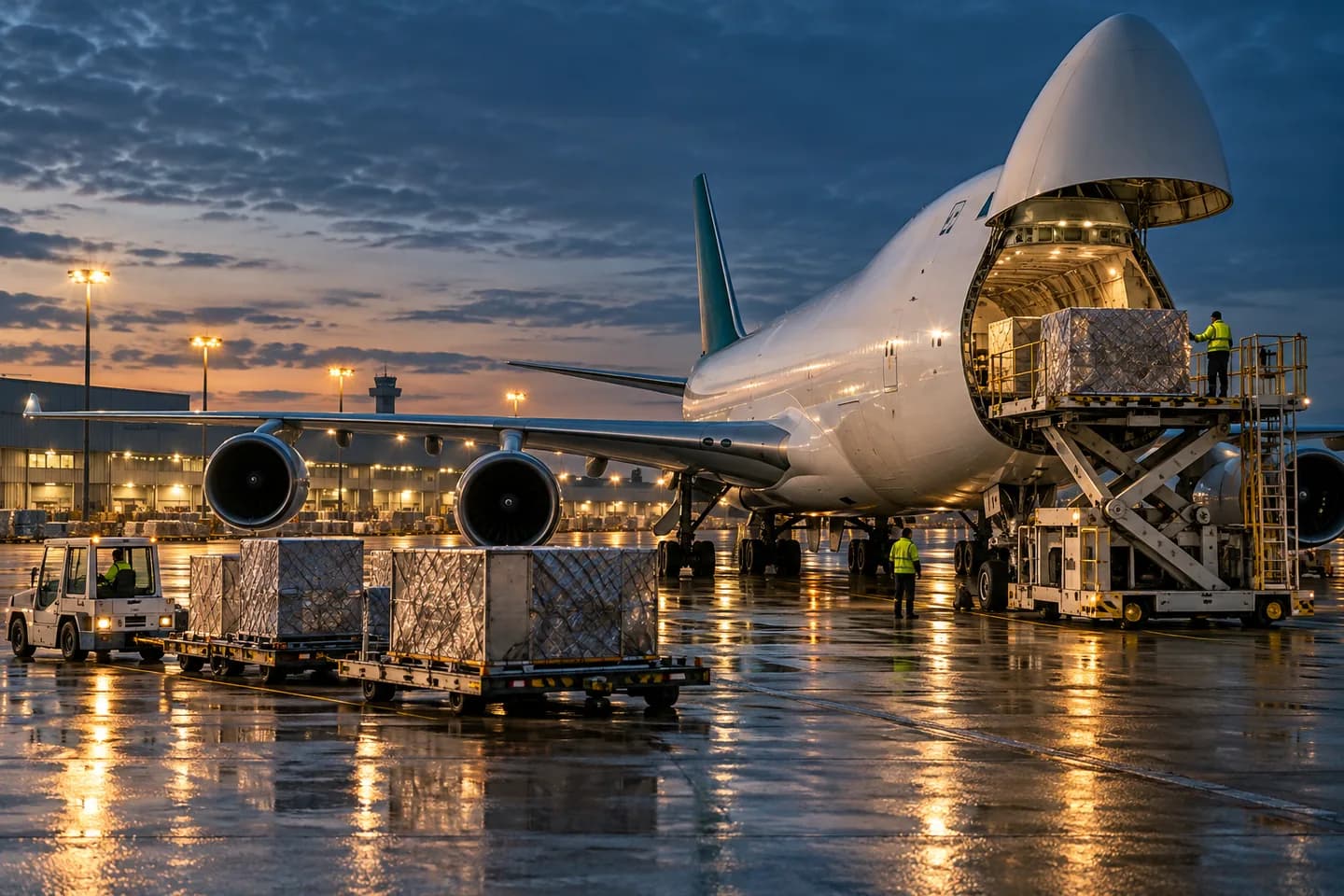
Air Freight Cost from China per kg: What Sets the Price
Published air freight rates from China per kg to the USA, Canada, Australia, New Zealand and Europe, and what sets the price: chargeable weight, breaks, fees.
How to Track a Shipment from China: Numbers and Statuses
Which tracking number you get for express, air, sea and rail shipments from China, why tracking goes quiet, and what each milestone means.

How to Ship to Amazon FBA from China: Step by Step
From the Seller Central shipment plan to box labels, carton limits, air or sea by marketplace, customs and appointments: how FBA first-leg shipping works.