LCL vs FCL Shipping from China: Which Should You Choose?
LCL or FCL from China? How each is charged, when a 20-foot container beats consolidation (around 15 CBM), what a container really holds, and transit times.
Key takeaways
- LCL is charged per cubic metre or per 1,000 kg, whichever is greater, plus origin and destination charges; FCL is priced per container.
- Under roughly 15 CBM, LCL is usually cheaper; above that, a 20-foot container often costs less in total.
- A 20' container holds about 33 CBM inside, but a practical load of cartons is roughly 25–28 CBM; a 40' high cube holds about 76 CBM, or roughly 65–70 CBM of cartons.
- The sea leg takes the same time either way, about 14–16 days from Shenzhen to Los Angeles / Long Beach; LCL adds time for consolidation before sailing and devanning after arrival.
Book LCL (less than container load) when you have less than about 15 cubic metres: you share a container and pay only for the space your cargo uses. Above roughly 15 CBM, a 20-foot container booked for your goods alone (FCL, full container load) is often cheaper overall, and it skips the consolidation and devanning steps at each end. Weight, fragility and deadlines can move that line either way.
What is the difference between LCL and FCL?
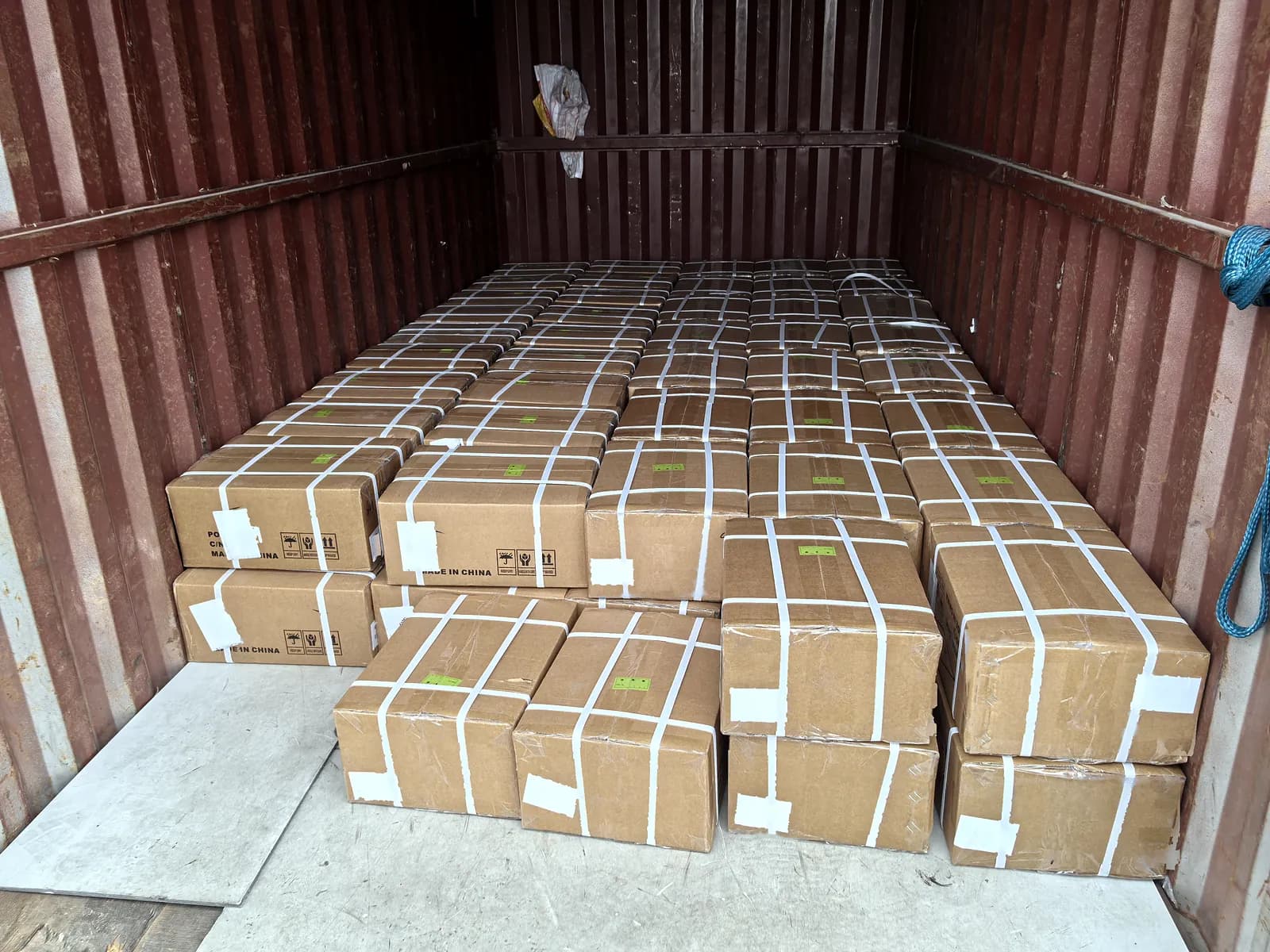
With FCL you book a whole container. It is loaded at the factory or our warehouse, sealed, carried to port, and opened only at destination. With LCL your cartons are delivered to a container freight station, or CFS, where they are loaded into a shared container with other shippers' goods, then unloaded (devanned) at a CFS at the other end before delivery.
Both travel on the same vessels and the same sea routes. The difference is how the space is bought and how often the cargo is handled.
How is LCL charged?
LCL freight is charged by weight or measure, written W/M: each cubic metre is compared with 1,000 kg, and the larger figure is charged, plus origin and destination charges. A shipment of 3.2 CBM weighing 1,400 kg is charged as 3.2 units, because 3.2 CBM is greater than 1.4 tonnes. A shipment of 2 CBM weighing 2,600 kg is charged as 2.6 units, by weight. Use our CBM calculator to total the volume of your cartons before you ask for prices.
FCL is priced per container, whatever you put inside it, as long as it stays within the container's weight limit. That is why FCL becomes cheaper per cubic metre the more fully you load it.
How much fits in a container?
| Container | Internal volume (approx.) | Practical load of cartons | Typical use |
|---|---|---|---|
| 20' dry | About 33 CBM | Roughly 25–28 CBM | Heavy goods, or about 15–28 CBM of cartons |
| 40' dry | About 67 CBM | Roughly 55–60 CBM | Larger volumes of mixed cartons |
| 40' high cube | About 76 CBM | Roughly 65–70 CBM | Light, bulky goods that need height |
The internal volumes are close to the published specifications of carriers such as ONE, whose sheet lists 33.1, 67.6 and 76.2 cubic metres. Real loads are lower because cartons never fill every gap, and pallets waste more space again. The same sheet lists maximum payloads of roughly 27–29 tonnes, but road weight limits at origin and destination often cap a load below that, so very heavy goods may fill a 20' by weight long before they fill it by volume.
Where is the break-even point?
Under roughly 15 CBM, LCL usually wins because you pay only for your share. Above that, the per-container price of a 20' often comes out below the per-CBM cost of LCL plus its handling charges. The exact point depends on the route, the season and the carrier, so between about 10 and 20 CBM it is worth pricing both.
- Under about 10 CBM: LCL, unless the goods are fragile or very high value.
- About 10–20 CBM: ask for both prices; the answer changes with route and season.
- About 15–28 CBM of cartons: a 20' container is often cheaper and faster at both ends.
- More than about 28 CBM: compare a 40' or 40' high cube with a 20' plus LCL for the remainder.
- Heavy goods: check the weight limit first; a 20' may be full by weight before it is full by volume.
Does LCL take longer than FCL?
At sea, no. From Shenzhen the main leg is about 14–16 days to Los Angeles / Long Beach, 7–9 days to Tokyo or Osaka, 20–25 days to Australian ports and 22–25 days to European ports, whichever load type you choose. LCL adds time on land: cargo must reach the CFS before the consolidation cut-off, and at destination the container is devanned before cartons are released. FCL can usually leave the port soon after customs clearance. See the China–USA and China–Australia route pages for the methods and times on each lane.
Which is safer for fragile goods?
FCL cargo is handled less: it is loaded once, sealed, and unloaded once. LCL cargo is handled at a CFS at both ends and shares the container with other goods, so strong cartons, clear marks and pallets for fragile items matter more. For high-value or fragile goods near the break-even point, FCL is often worth the small premium.
How we handle LCL and FCL
As an NVOCC, XINTING books full containers and consolidates LCL from Yantian, Shekou, Guangzhou, Hong Kong, Ningbo, Shanghai and other Chinese ports, direct or via transshipment, with carriers including COSCO, MAERSK, MSC, ONE, OOCL and Evergreen. Our own container fleet handles trucking to and from port. Read more about our ocean freight service.
If you buy from several factories, they can deliver to our Shenzhen warehouse, where goods are checked and combined into one LCL shipment, or into one container once the total passes the break-even point. See warehousing and consolidation, then send your volume and weight with a quote request, and we will price both options.
FAQ
Can goods from several suppliers go in one container?
Yes. Suppliers deliver to our Shenzhen warehouse, where each delivery is received and checked; the goods are then loaded together, as one LCL shipment or, once the total is large enough, as one full container.
What does W/M mean on an LCL quote?
Weight or measure: the freight is charged on whichever is greater, the volume in cubic metres or the weight in tonnes (1,000 kg). A 2 CBM shipment weighing 2,600 kg is charged as 2.6 units.
Should I book one 40' or two 20' containers?
For light, bulky goods a 40' or 40' high cube usually costs less than two 20' containers. For heavy goods such as stone or machinery, weight rather than space is often the limit, so two 20' containers may be the right choice. We can price both.
Is there a minimum volume for LCL?
LCL quotes normally carry a minimum charge, often equal to one cubic metre, plus fixed origin and destination charges. For very small shipments, compare LCL with air freight or express before booking.
Sources
Services and routes in this article
Send us the details — you'll get a confirmed door-to-door quote and a dedicated coordinator.
Read next
All insights
How to Ship to Amazon FBA from China: Step by Step
From the Seller Central shipment plan to box labels, carton limits, air or sea by marketplace, customs and appointments: how FBA first-leg shipping works.
Chinese New Year 2027 Shipping: Deadlines and Planning
Chinese New Year falls on 6 February 2027. Factories close for one to four weeks and space tightens before the holiday. A month-by-month plan for shippers.
Air, Sea, Rail or Express from China: How to Choose
Compare air freight, sea freight, China–Europe rail and express from China by speed, how each one is charged and what it suits best.