Freight Consolidation in China: Ship Many Suppliers as One
How freight consolidation in China works when you buy from several Alibaba, 1688 or factory suppliers: one warehouse, one shipment, one set of charges.
On this page
- What is freight consolidation from China?
- Why does shipping each supplier's order separately cost so much?
- How does consolidating several suppliers work?
- What if suppliers finish at different times?
- Can you consolidate Alibaba and 1688 orders together?
- Will my customers or Amazon see my suppliers' names?
- When is consolidation not worth it?
- How do you choose air, sea or rail for a consolidated shipment?
- What should you send for a consolidation quote?
- FAQ
Key takeaways
- Freight consolidation means several suppliers deliver to one warehouse in China and the goods leave as one shipment, so the minimum charge, per-shipment fees, import clearance and final delivery are paid once instead of once per supplier.
- XINTING consolidates at its warehouses in Shenzhen and Dongguan: suppliers deliver or we collect, each delivery is received and checked, goods are repacked and relabeled where needed, and the orders ship together by air, sea or rail.
- Plan around the latest supplier's ready date: earlier deliveries wait at the warehouse, and any free storage period, its conditions and handling charges are confirmed with your quote.
- Relabeling keeps supplier names off the cartons your customers see, but customs documents still show what customs requires, such as each manufacturer in a US Importer Security Filing and the goods' country of origin.
- Consolidation is rarely worth it when one supplier fills its own container, when the whole order is a few kilos that can go by express, or when one order is urgent and the rest can wait.
Freight consolidation means having your goods from several suppliers delivered to one warehouse in China, where they are checked, combined and shipped as a single shipment. Instead of paying a minimum charge, fixed origin and destination fees, a customs entry and a delivery for every supplier, you pay them once on the combined load. If you buy from two or more factories, Alibaba sellers or 1688 shops in the same region, it is usually the cheapest and most controlled way to ship.
This guide, written as of 19 November 2026, explains how consolidation works step by step, how to handle suppliers that finish at different times, what happens to supplier names on cartons and documents, when consolidation is not worth it, and what to send for a quote.
What is freight consolidation from China?
The word consolidation is used in two ways. A forwarder consolidates cargo from many different shippers into one container: that is how LCL sea freight works, with the goods loaded at a container freight station. Buyer consolidation, the subject of this guide, is the step before that: one importer's orders from several suppliers are gathered in one warehouse and booked as one shipment, with one set of documents and one delivery at the other end.
People searching for a "China consolidation warehouse", a "China shipping agent" or a "1688 shipping agent" usually want exactly this: a company in China that receives orders from different sellers, checks them, puts them together and ships them abroad. Our warehousing and consolidation service does this at our warehouses in Shenzhen and Dongguan, for air, sea and LCL cargo.
Why does shipping each supplier's order separately cost so much?
Freight from China is not priced only by weight. Every shipment carries costs that do not shrink with its size: a minimum charge, fixed charges at origin and destination, an import declaration, and a delivery. A small LCL lot is charged at least the minimum, often one cubic metre, even if it is half that size, and air freight has a minimum chargeable weight. When five suppliers each send a small lot, you pay those fixed costs five times, and the cartons arrive on different days.
| Cost or task | Five suppliers ship separately | One consolidated shipment |
|---|---|---|
| Minimum charge | Up to five, one per shipment | One, on the combined load |
| Fixed origin and destination charges | Charged on every shipment | Charged once |
| Import declarations at destination | Up to five | One |
| Chargeable weight or volume | Each small lot is rounded up on its own | Rounded once, on the total |
| Deliveries to you or to Amazon | Up to five, on different days | One |
| Goods checked before export | Depends on each supplier | Each delivery checked at our warehouse |
| Tracking numbers to follow | Up to five | One |
The saving depends on how many suppliers there are, how small each order is and which way it ships. Our LCL vs FCL guide explains how sea freight is charged by weight or measure, and the chargeable weight guide shows how air and express are charged.
How does consolidating several suppliers work?
- Send us the plan. List your suppliers, the goods, the expected ready date of each order and the destination. We quote the consolidation and the main shipment and give you the delivery details for the warehouse.
- Buy on terms that end in China. Ask each supplier for a price delivered to our Shenzhen warehouse, or buy EXW or FCA and we arrange pickup from the factory. Our Incoterms guide explains the terms.
- Mark every carton. Each supplier marks its cartons with your name or shipping mark and the order number, so every delivery can be matched to its order on arrival.
- Receive and check. We receive each delivery and check the packages against the order: carton count, marks and visible condition. Short or damaged deliveries can be raised with the supplier while the goods are still in China.
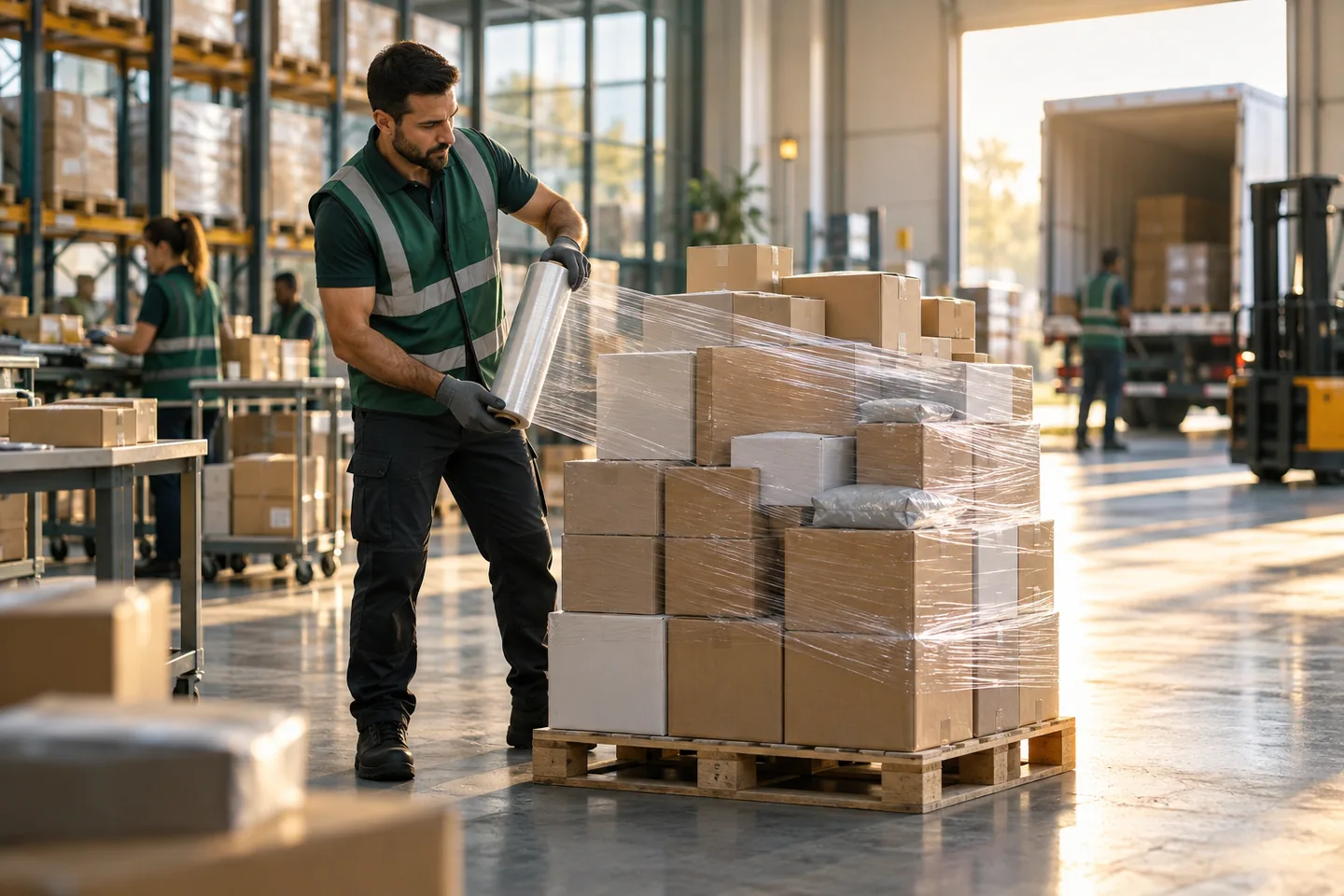
- Repack and relabel where needed. Cartons can be repacked, relabeled with your own labels or prepared with Amazon box labels and FNSKU product labels.
- Book the main shipment. When the last order arrives, the total weight and volume decide the best option: air, sea LCL, a full container or, to Europe, rail. The goods leave as one shipment under one transport document.
- One clearance, one delivery. The shipment is cleared once at destination and delivered to your address, a warehouse or Amazon.
What if suppliers finish at different times?
This is the normal case, not the exception. Plan the main shipment around the latest ready date and let the earlier orders wait at the warehouse. Any free storage period and its conditions, together with handling charges, are confirmed with your quote, so ask before you place orders with long gaps between them.
- Ask every supplier for a realistic ready date, not the most optimistic one, and confirm it a week before.
- If one supplier runs late, you can ship what has arrived and send the late order separately or with your next consolidation.
- Before Chinese New Year, factories close and space tightens; our Chinese New Year 2027 guide has the dates to plan around.
- Tell us in advance if any order contains batteries, magnets, liquids or powders, because they may need a different route from the rest. See our special goods guide.
Can you consolidate Alibaba and 1688 orders together?
Yes, as long as each seller can deliver to an address in China. Alibaba.com suppliers sell for export and often quote delivery to a forwarder's warehouse. 1688 is a domestic Chinese marketplace: its sellers normally ship only within China and do not prepare export documents. If you buy on 1688 yourself or through a buying agent, give the seller our warehouse address as the delivery address, and mark the order with your shipping mark so the parcels can be matched when they arrive.
For the export, the shipment needs one commercial invoice and one packing list covering all the goods, made out for the shipment as a whole. We prepare the export declaration from that invoice and packing list. Our shipping documents guide lists what each document contains.
Will my customers or Amazon see my suppliers' names?
Not on the cartons. We ship the consolidated orders as one shipment and keep your suppliers' details confidential, and cartons can be relabeled before they leave our warehouse, so the parcels your customer or Amazon receives carry your labels, not the factory's.
Customs is different. The documents still have to state what customs requires. For ocean freight into the United States, the Importer Security Filing lists the manufacturer or supplier of the goods, the consolidator and the container stuffing location. Every item must also keep its country-of-origin marking when cartons are repacked. Relabeling hides suppliers from your customers, not from customs.
When is consolidation not worth it?
- One supplier fills a container. Above roughly 15 CBM a 20-foot container often beats LCL, and a supplier that fills one can load it directly. Add the other orders only if they fit in the same container.
- The whole order is a few kilos. Samples and small parcels are usually quicker and simpler by express straight from the supplier: it is priced per 0.5 kg, and per kg from 21 kg.
- One order is urgent. If one supplier's goods are needed now and the rest can wait, ship the urgent order by air and consolidate the rest.
- Suppliers are far apart. Trucking goods from eastern China to Shenzhen takes time and money; when most suppliers are near Ningbo or Shanghai, ask us to compare shipping from those ports, which our ocean freight service also uses.
How do you choose air, sea or rail for a consolidated shipment?
Once all orders are in, the total decides the method. Use the CBM calculator with the carton sizes from each supplier to estimate the volume and chargeable weight.
- Air freight is charged on chargeable weight, the greater of actual weight and volume weight (length × width × height in cm ÷ 6,000). Our published air rates start from 22 kg chargeable to the USA, Canada and Australia, 11 kg to New Zealand, and 10 kg, also per carton, to Europe and the UK. See air freight.
- Sea LCL is charged per cubic metre, or per 1,000 kg when the cargo is heavier, whichever is greater. Under roughly 15 CBM, LCL is usually cheaper than a container.
- China–Europe rail suits Europe-bound orders that can wait about five weeks; our published rail rates start from 21 kg, with at least 12 kg per carton.
- Amazon sellers can send the consolidated shipment straight to Amazon, or to our overseas warehouses in the US, Japan (Tokyo, Osaka and Tosu) and Europe for storage and relabeling. See Amazon FBA shipping.
Good cartons matter more in a consolidation, because orders from different factories are handled and stacked together. Our export packing guide covers carton strength, marks and pallets.
What should you send for a consolidation quote?
- The number of suppliers and the city each one ships from
- The goods in each order, with HS codes if you have them
- Carton count, weight and carton sizes for each order, or an estimate
- Each supplier's expected ready date
- The destination and the address type: business, warehouse or Amazon
- Any batteries, magnets, liquids or powders
- Repacking or relabeling you need, including Amazon labels
Send these with a quote request and we will confirm the consolidation, the storage terms and the best way to ship the combined load. Common questions about storage and pickups are answered in the warehousing FAQ.
FAQ
What is a consolidation warehouse in China?
A warehouse where a forwarder receives goods from several of your suppliers, checks them, repacks or relabels them if needed and ships them together as one shipment. Ours are in Shenzhen and Dongguan and handle air, sea and LCL cargo.
Is consolidation cheaper than having each supplier ship to me?
Usually, when you buy from two or more suppliers in the same region. Minimum charges, fixed origin and destination fees, the import declaration and the delivery are paid once on the combined load instead of once per supplier. The exception is a supplier whose order fills a container by itself.
Can I ship Alibaba and 1688 orders together?
Yes. Give each seller our warehouse address in China as the delivery address and mark the orders with your shipping mark. 1688 sellers usually ship only within China, so the export declaration is prepared from one commercial invoice and packing list for the whole shipment.
How long can goods wait at the warehouse for the other suppliers?
Earlier orders wait at the warehouse until the last one arrives. Any free storage period and its conditions, together with handling charges, are confirmed with your quote, so ask before placing orders with long gaps between their ready dates.
Are my goods inspected before they leave China?
Each delivery is received and checked at package level: carton count, marks and visible condition against your order, so short or damaged deliveries can be raised with the supplier while the goods are still in China. This is not a product quality inspection.
Will the supplier's name appear on the cartons my customer receives?
Not if you don't want it to. We keep your suppliers' details confidential and can relabel cartons before they leave our warehouse. Customs documents still name what customs requires, such as the manufacturer in a US Importer Security Filing.
Sources
Services and routes in this article
Send us the details — you'll get a confirmed door-to-door quote and a dedicated coordinator.
Read next
All insights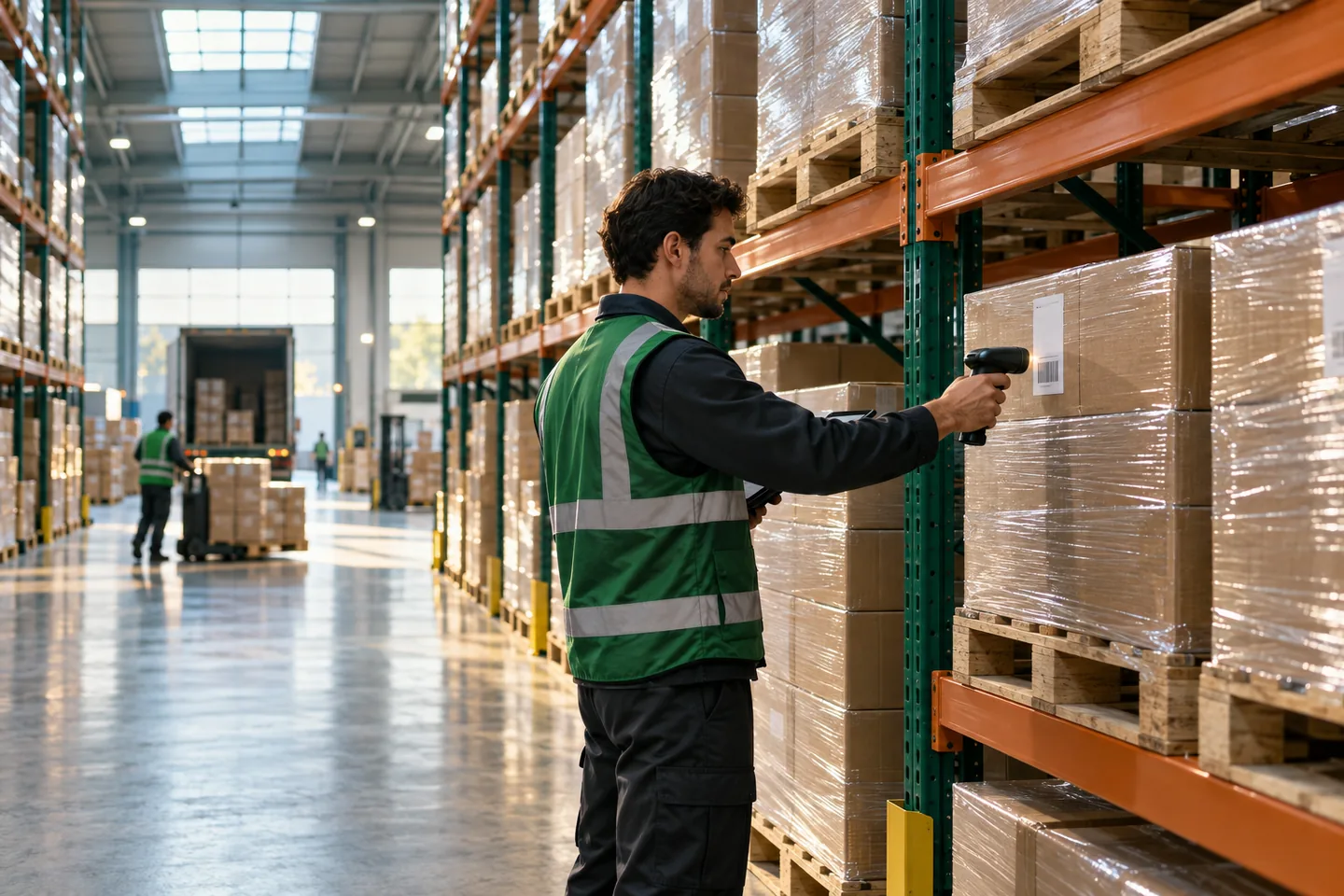
How to Ship to Amazon FBA from China: Step by Step
From the Seller Central shipment plan to box labels, carton limits, air or sea by marketplace, customs and appointments: how FBA first-leg shipping works.
Alibaba Shipping: Cheapest Way to Ship from China by Size
The cheapest way to ship an Alibaba or 1688 order from China by size: express, air, LCL or rail, supplier shipping vs your own forwarder, a 100 kg example.
Demurrage vs Detention and Customs Exam Fees: Who Pays
Demurrage vs detention explained, plus US customs exams (X-ray, tailgate, intensive, CET): who pays when a container from China is held, and how to avoid it.